Attractions and landmarks
Zlatograd – a place of golden history and living culture.
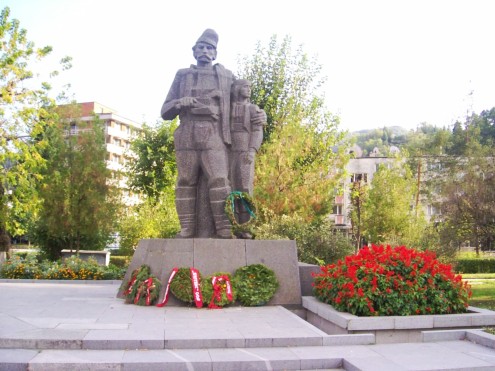
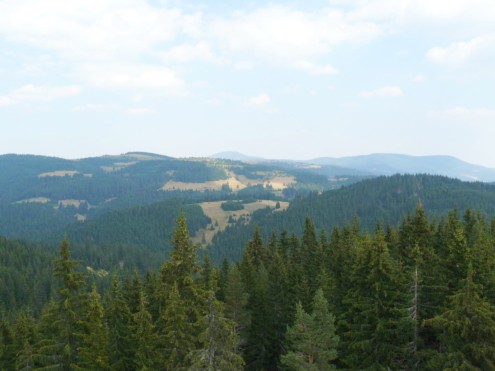
History of the town of Zlatograd
Once, Zlatograd was called Belovidovo — because of its dazzlingly white houses. It’s hard to find a more fitting name for a settlement! The walls surrounding all the old-style houses are whitewashed, and their walls and rooms are also white.
The white houses of the former Belovidovo perch along the banks of the two rivers — the Golyama and the Malka — which converge to form the beginning of the Vrbitsa River.
During the Ottoman rule, Zlatograd was called Darı-Dere — a name with an unclear etymological origin. “Dar-ı” can mean both “millet” and “narrow.” It cannot mean “narrow,” because Zlatograd is built on the only wide spot in the entire valley, and millet was not known here. According to other theories, Dar-ı Dere comes from Der-i-Daare, translated as “the gate of water, of abundance.” Indeed, Zlatograd is settled along the course of two rivers. The exact time of the first settlement is unknown. However, excavations in the areas of Choynevi Laki and Djerakhovi Nivi have revealed medieval necropolises from the 10th–12th centuries, dating to the early Christian era. On the other hand, an ancient burial found on the ridge opposite Svetа Nedelya Peak is clearly Thracian. Alongside the skeleton and a horse’s skull, fibulae and Maronean coins from over 2,000 years ago were discovered. Archaeological and historical monuments confirm that this region was inhabited by Thracians, Slavs, and Bulgarians. The area also bears traces of an old settlement — ruins of churches, fortress walls, roads, and bridges.
After the Liberation from Ottoman rule, the town received its current name — Zlatograd. Green gold — tobacco, deposits of lead-zinc ore, clear water, and fresh mountain air — are the benefactors of this settlement.
Zlatograd is a settlement with a rich culture and centuries-old history. Here, you can visit numerous churches, monasteries, and Christian cemeteries, which testify that this land was predominantly inhabited by Bulgarians.
The first parish school, which marked the beginning of educational and cultural work in the Rhodopes, is located in Zlatograd. Here, the oldest written monument of the Rhodopean Revival — the "Zlatograd Manuscript" (dating from 1852) — was discovered, unique among the known Revival-era literature in Bulgaria. Zlatograd is also home to the oldest church in the Rhodopes, the "Assumption of the Virgin Mary," built in 1834, according to records. преданието, за 40 нощи.
The city’s distinctive character is defined by its architectural reserve. The National Institute for Cultural Monuments has registered over 100 architectural cultural monuments within it. For Bulgarian ethnographers, historians, and philologists, Zlatograd is a center of the oldest traditions of the material culture and lifestyle of our people. The buildings in the reserve stand out with their whitewashed courtyard walls, open attics, whitewashed chimneys, and wide oak doors. Elements of Xanthian and Plovdiv architectural styles can also be found. Most courtyards feature wells surrounded by oak baskets, with “windlasses” for drawing water, and eaves covered with single-slope roof tiles. In the old part of the town is also the Revival-era ensemble, which is not merely a frozen picture of that time. Even today, the chimneys of its houses still smoke, and...
its rooms are filled with Rhodopean songs and lively chatter. Within the architectural reserve, an Ethnographic Area Complex has been established, representing a “living” exhibition. It is located in one of Zlatograd’s neighborhoods, known as the “Old Town” — several streets lined with inhabited houses in traditional architectural style. Some of the…
The houses have been transformed into charming cafés and restaurants. If you grow tired while walking along the picturesque streets, you can enjoy a delicious dish to the sounds of melodies played on the gaida (bagpipe) and sip a cup or two of the aromatic Zlatograd sand coffee. The recipe remains a family secret, but its taste is incomparable.
The workshops showcasing traditional crafts are especially fascinating. Throughout the year, in authentic and suitable interiors, all activities related to the primary processing of wool, fur, and cotton are demonstrated live, including spinning, knitting, weaving — using both vertical and horizontal looms (including mutaf-style weaving), as well as abadjiystvo (coat-making), gaidandzhiystvo (bagpipe-making), tailoring, knife-making, and the production of Rhodopean specialties and Zlatograd beverages.
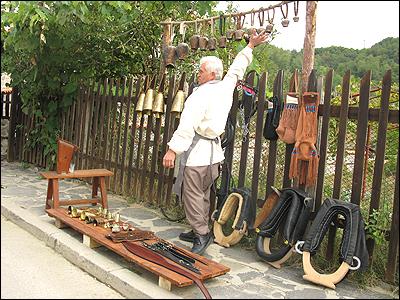
In the reserve, you can also see a sewing machine over 100 years old, and you can watch demonstrations of how medieval swords were forged. When you enter the knife-making workshop, the master will always give you a blue bead — a little talisman to take home. Zlatograd is the only place where goat horns are crafted, skillfully attached to specially made wooden handles.
The watermill is one of the most attractive sites, comprising three installations — a fulling mill, a hemp-breaking device, and a karadzheika watermill.


The cradle of love and a photo frame
The cradle of love and a photo frame


Churches and chapels
Sacred area "Cross Forest"
The sacred area “Krastata Gora” (encompassing the lands of Zlatograd) likely dates back to the time of pagan sanctuaries, which were later transformed into Christian cult sites. The deification of the Sun originates from ancient times and was later transformed into the image of Jesus Christ — the Creator of the world and the Sun. Faith in the miraculous power of the Christian cross is deeply reflected in Zlatograd. On four of the highest surrounding peaks, there were originally pagan sanctuaries that were later converted into Christian worship sites. These are: “St. Nedelya” (with an existing chapel), “St. Kostadin,” “St. Atanas” (with an existing chapel), and “St. Ekaterina” or St. George Peak. The imagined lines connecting the opposite peaks form a kind of cross. For this reason, the local population calls the entire area of the cross “Krastata Gora.” Even today, it is believed that Zlatograd has been and will continue to be protected from evil — thanks to its location within this sacred zone.

Church of Saint Nedelya
Of exceptional interest is the church-monastery fortress on St. Nedelya Peak, located 8 km northwest of Zlatograd, where, amid an oak forest, the eponymous chapel and its auxiliary buildings have been constructed.

Church of St. George the Victorious
In 1871, the second church in Zlatograd, “St. George the Victorious,” was built. A Bulgarian secular school was also established in its courtyard. In its preserved building, the museum collection “Educational Work in the Central Rhodopes” is housed. Additionally, a museum collection of communications is located in another building that is a cultural monument.

Chapel of Saint Athanasius
The “St. Atanas” chapel is picturesquelу situated on a hill near the town, offering views of almost the entire Zlatograd.

Chapel of Saints Constantine and Helena
In 2006, the chapel of Sts. Constantine and Elena, located right on the Bulgarian-Greek border, was restored. All of these chapels are built on the peaks surrounding Zlatograd, on the sites of former monasteries. Their natural arrangement forms the so-called “Krastata Gora.”
Eco-trails


Eco-trail “In the Footsteps of Deliu Haidutin”
| It is being developed under the PHARE program — Economic and Social Cohesion: “Development of Bulgarian Ecotourism.” The altitude ranges between 250 and 700 meters. The eco-trail follows the legend of the hajduk Delu, who reached Kostadin Peak to hide from Ottoman troops. The trail starts from Zlatograd, at the site called “The Military Garden,” and passes by the Bunyo Vriz spring. It continues along an asphalt road for about 200 meters, then leads onto a mountain path through pristine forests, where human footsteps were rarely seen until recently. Along the way, you reach a well built during the Ottoman period, where the most famous hajduk, Delu Voivoda, and his band used to stop to drink the crystal-clear water after fierce and heavy battles with the belyukbashi. From there, the trail reaches the area of St. Elijah (650 m above sea level), which offers a campsite and a gazebo. The eco-trail allows visitors to see, at close range, many diverse relief features, centuries-old trees, and over 200 species of interesting plants. A unique phenomenon is the presence of beech trees at just 350–400 meters above sea level. |
“Mountain Embrace” Eco-trail
Upcoming: It will be developed under the PHARE program — Economic and Social Cohesion. The trail is 4 km long, with a route duration of about 2 hours, and is marked with signposts. It starts from the parking lot of the “Diana” nightclub and passes through a broadleaf forest. Along the trail, there are numerous fountains with crystal-clear water, some of which have resting areas.
Екопътеката продължава на юг до самотна скала, наречена “Чуката”, която може да изкачите или да заобиколите. От скалата се разкрива великолепна гледка и в североизточна посока град Златоград се вижда като на длан. След 200 м. стигате до параклиса “Св. Атанас”, разположен сред прохладна горичка. На този връх е открито находище от тетрадрахми, от началото на нашата ера, изобразяващи олимпийски игри. Предполага се, че на това място е имало древна крепост.
Eco-Echo Eco Trail (Zlatograd – Villa “Belotex”)
|
Eco-trail length: 10 km. Duration: 2 hours 30 minutes. Marking: gray trail markings and wooden signposts. The route starts from the Courthouse in Zlatograd and passes by the Physiculturist’s Fountain and shooting range, a villa area, a rest area with an Ornithological Corner, “Barchinata,” the protected tree “Ancient Chestnut” (Castanea sativa, 278 years old, the oldest in Smolyan Province), another rest area, a rugged valley, the “Dabeto” area (ancient oak forest), a fountain and rest spot, another villa area, lentil fields, and orchards. The trail ends at the “Belotex” villa, situated high in the mountains and surrounded by the beauty of the Rhodope Mountains. |
“St. Nedelya” Eco-trail (Zlatograd – “St. Nedelya” Chapel)
Eco-trail length: 12 km. Duration: 3 hours. Elevation gain: approximately 400 meters. Marking: blue trail markings and wooden signposts.
The route begins at the Watermill (Tepavitsa) in Zlatograd — the most attractive site of the ethnographic complex, which includes three traditional installations: the fulling mill (Dŭshta), the hemp-breaking device (Tepavitsa), and the watermill (Karadzheika). At the tavern “By the Watermill,” you can try specialties of Zlatograd cuisine, including fresh cornmeal porridge, patatnik, and klin.
Along the route, you pass a fountain with a rest area, Villa Boshnakov, a bunker (protected structure), the “Dark Forest,” a second fountain with a bivouac area, a panoramic viewpoint, a detour to the village of Startsevo, and the site “Beloto Kamene” (the largest Thracian sanctuary of the Sun God on Bulgarian territory), a birch grove, crossing the road to the village of Presoka — passing villas Belotex and DAP.
The endpoint is St. Nedelya Peak, 865 m high. On a clear day, with some luck, you can see the highest peak of Samothraki Island in Greece and the Aegean Sea. For information on the “St. Nedelya” chapel, see the Culture section.
Zlatograd Cycle Path - Thracian Sanctuary "White Stones"
Length: 8 km. The route starts from the ZMM building in Zlatograd, follows an open agricultural road to Villa “Belotex,” then continues toward the village of Startsevo and reaches the Thracian sanctuary “Belite Kamani” (“The White Stones”). In the section before St. Nedelya Peak, it merges with an eco-trail. The road has an average width of 2 meters.
Address
gr. Zlatograd,
Str. “St.. St. Stambolov №75
Phone
0895 464 546,
0886 838 399
Entertainment
